This piece was originally written as journal response to following prompt about “Beati quorum via” composed by C.V. Stanford.
“Stanford’s music depends on balance, blend, and integrity of line — each voice matters, but none dominates. How does singing this piece shape your understanding of integrity — both musically and spiritually? What does it mean to live ‘in tune’ with others in community? Have you experienced a moment in rehearsal where the music felt like a metaphor for the kind of life or faith you hope to live?”
It’s a bit ironic that I’m drawn to this prompt, since I don’t usually approach music by wondering how I can blend into the group. Dr. Svenningsen has told me too many times about my tendency to go off into “Blake Land” whilst rehearsing a piece. I prefer my voice to be present and intentional. I like to sing in a way that shows I know what I’m doing, because, ideally, I do. That kind of confidence can be helpful, and it has certainly aided in my solo singing. But with Stanford’s music, it needs to be more focused. If not, that confidence can kind of get in the way of the music-making.
That’s part of what makes “Beati quorum via” so powerful. Stanford sets the first verse of Psalm 119: Beati quorum via integra est, qui ambulant in lege Domini: “Blessed are those whose way is blameless,” or more literally, whole and upright. The word integra stands out to me. It’s where we get the word “integrity,” but it also means wholeness, something complete. That idea is built into the music. The piece is short, unaccompanied, and clear. There’s nowhere to hide. Every vocal line matters, but none takes over.
That’s probably why this motet affects me so much. My problem isn’t that I have too little to offer. If anything, I have to remind myself that bringing something to the group doesn’t mean everyone needs to notice it all the time. “Beati quorum via” doesn’t ask me to shrink or apologize for myself. It asks for something harder: to be fully committed and present, but not to make myself the center of attention.
This experience has changed how I see integrity. I usually think of it as confidence, conviction, and strength of character. Those are important. A singer can’t help this piece by being unclear or timid. The line needs support, the pitch must be steady, and the phrase should be intentional. But Stanford’s music shows me that integrity isn’t just about strength and putting your voice out there. It’s about being whole enough that your strength doesn’t have to overpower others. It’s about bringing something real to the group without trying to control it.
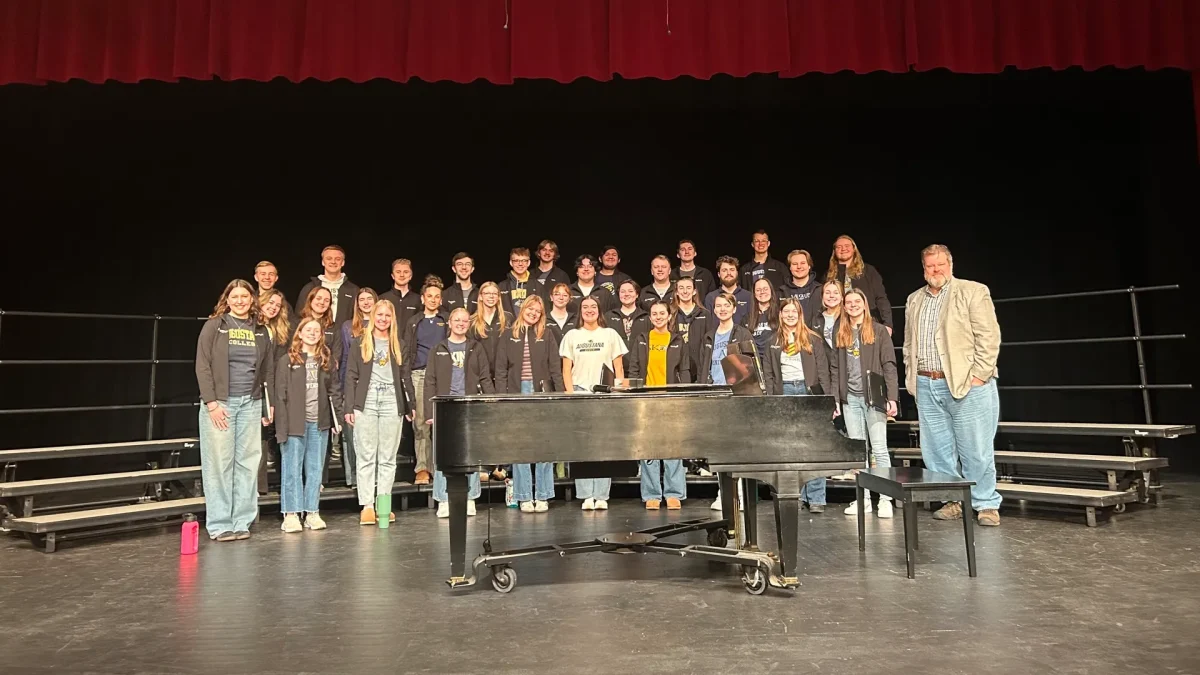
I’ve noticed this most in rehearsal. Sometimes the choir is almost together; a chord nearly in tune, a phrase almost right — but something is missing. The solution isn’t more volume or more ego; It’s more listening. Dr. Svenningsen gets on our backs about this frequently, and it makes total sense. Someone changes a vowel. Someone softens their tone. Someone stops pushing and starts listening. Suddenly, everything comes together. The sound gets fuller and more beautiful, not because one person took over, but because no one did.
I recall a time during one of my lessons with Dr. Svenningsen and Professor Campbell, where they talked about me as if I wasn’t there. I awkwardly stood there as they commented on my soloistic talent and my musicality, which made me feel satisfied and proud. But then it turned into a bit of a chastisement when these same tendencies showed up in an ensemble setting. I took note of this and began to shift how I was singing during choir. Once this happened, I noticed so much more about the music than I had before, especially while singing the Stanford.
That feels like more than just a musical lesson. It feels spiritual, too. If the text talks about people whose way is integra, meaning whole, upright, rightly ordered, then singing this piece makes me ask if I am that kind of person in a group. Not just talented or sincere or aware of my own worth, but able to listen, to trust, and to live with others without needing to be in charge.
That is part of why this piece feels like a sermon set to music. It reflects a kind of spiritual life that is not built on self-display, but on order, humility, and service. In that sense, it reminds me of a good priest: someone who may have a visible role but understands that the purpose of that role is not to draw attention to himself but to point beyond himself toward something greater.
I think that’s the biggest lesson “Beati quorum via” has given me: integrity isn’t just knowing who you are. It’s being whole enough to offer yourself in the service of something bigger. In choir, that means blend, balance, and trust. In life, I think it’s much the same.
Blake is from Sioux Falls, SD and is majoring in music with an emphasis on vocals.