This piece was originally written as journal response to following prompt about Were You There arranged by Norman Luboff.
“The spiritual asks directly: ‘Were you there when they crucified my Lord?’ When you sing this question, how do you answer it personally? What does it mean to place yourself at the foot of the cross through music? Have there been moments when this piece has felt emotionally or spiritually heavy? Why?”
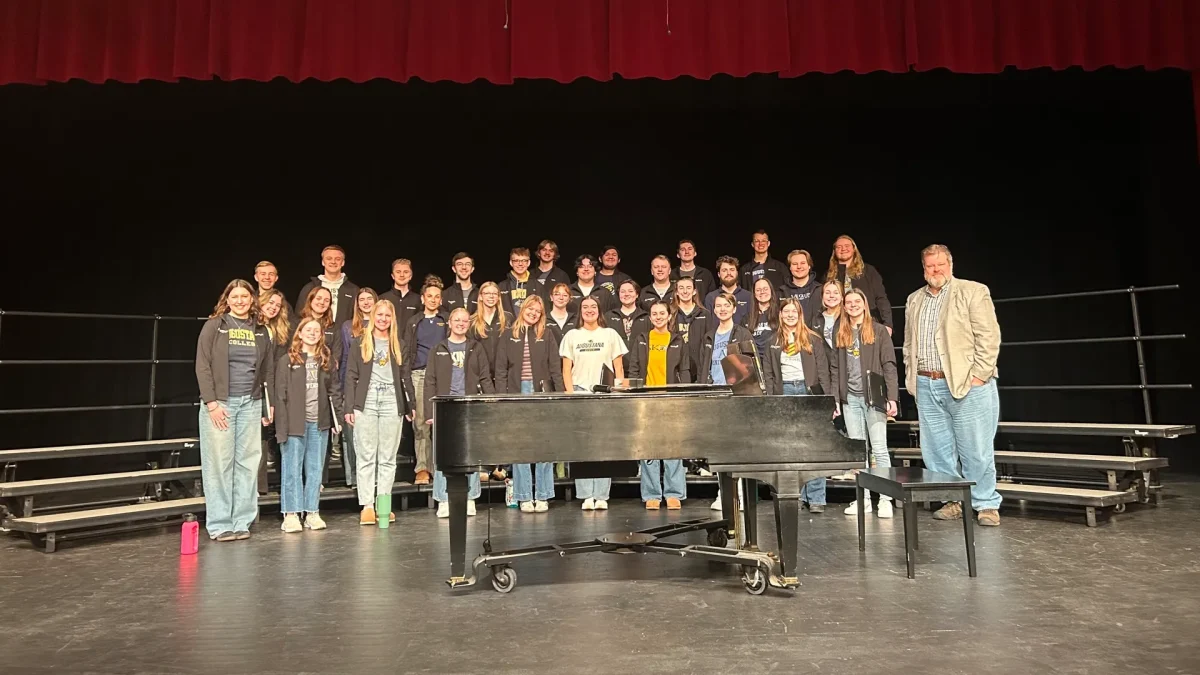
Through singing in the Augustana Choir, I’ve been honored with the opportunity to make music with many talented individuals and a brilliant director. Rehearsal is sacred. We start at 4:00 pm — on the dot — and we work meticulously for an hour and a half almost every day of the week. We focus on blending, matching pitch, balance, and enunciation. All of this requires immense concentration and constant self awareness to put together, but even when the pitches are right and our vowels align, they mean nothing without the words and intention behind them. Because of Augustana’s strong commitment to sermon in song, we get to sing a vast array of sacred music that places us at the foot of the cross in worship every day.
The long hours we put into our rehearsals culminates, of course, to a concert we perform for our community. As a person of faith who has spent much of my life in musical performance, I can admit it can be easy to get wrapped up in the theatrics of a choral concert. There’s a lot to think about and prepare for whether it’s the logistics of moving a group on and off the stage in a professional way, or the special care we take for appearances as we fix our hair and makeup before a performance. We’re often told to smile to be entertaining for an audience, and to not do anything distracting on stage. We’re eager to share what we’ve been working on for so long. However, when we begin to sing, I’m reminded that I’m most importantly performing for an audience of one. Ultimately, we worship; we share the spiritual gifts we were given from God.
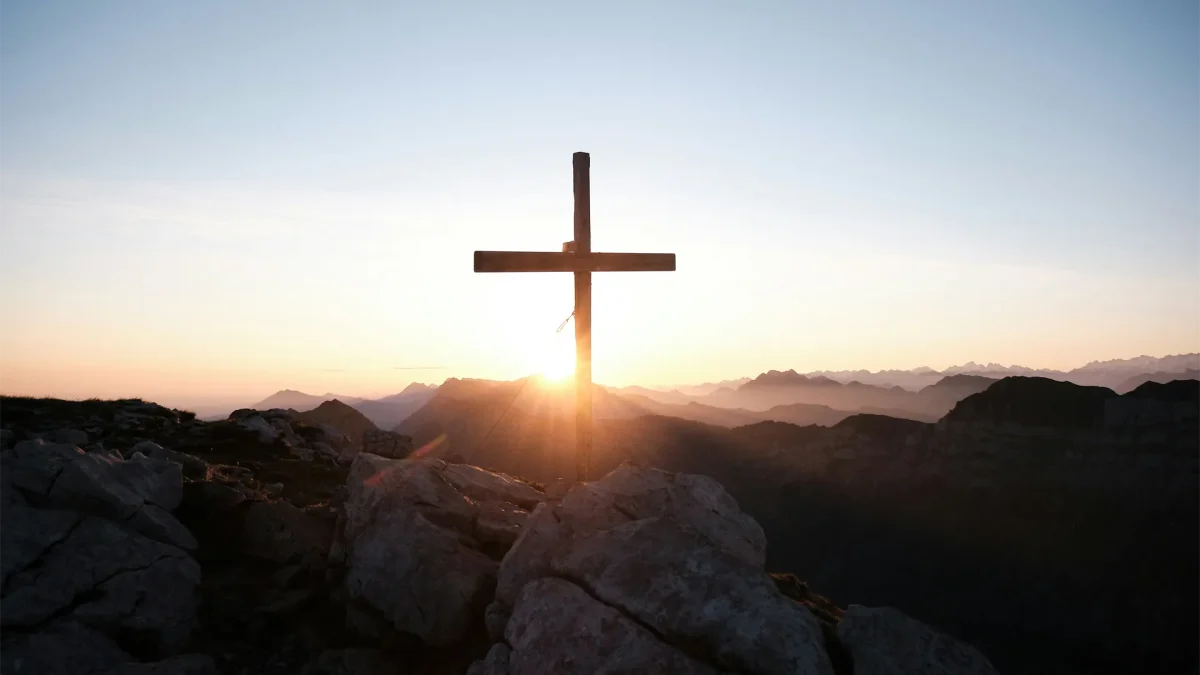
For our Tiårasang — ten-year song — recording project this year, one of our pieces was Norman Luboff’s arrangement of “Were You There,” an African American spiritual. Its lyrics ask listeners and performers alike to interrogate their faith, imploring, “Were you there when they crucified my Lord?” and “Were you there when they laid him in the tomb?” It places us in the midst of Jesus’ suffering. It humbles us as we lower ourselves to the cross in reverence.
The pitches seem to fall forward too as the piece drives in perpetual motion. During its softness, it still carries intensity. When we sing with no words, it doesn’t lack meaning. Twice in the piece, we erupt into a sustained, wordless, outpouring when feeling becomes larger than language. For a song with very few phrases, it somehow communicates just as much on an open vowel: “O.” It reminds me of scripture: “Likewise the Spirit helps us in our weakness. For we do not know what to pray for as we ought, but the Spirit himself intercedes for us with groanings too deep for words” (Romans 8:26, English Standard Version).
Just like there are so many feelings we don’t know how to vocalize, there’s so much about God’s character we can’t understand in His perfection in the midst of our hurting world. As mentioned, this hymn was written during the antebellum South, when enslaved people endured massive suffering. I cannot fully imagine what this song would mean to a group of people who shouldered so much or what it would mean to relate so strongly to our suffering savior. Even through this evil, faith in Christ doesn’t waver. The hymn’s lyrics remain reverent and praiseful through the phrase, “Sometimes it causes me to tremble.” Knowing that God has a plan through the pain and destruction in our world causes me to tremble all the time.
Through singing Luboff’s piece, we’re able to honor and worship with each person it served before us. Music offers a unique opportunity to connect with people through all time periods and all cultures. Although we don’t know the individual experiences of the people who sang this before us, there’s something about music that transcends every other way of communication. The timeless emotion evoked through the tenderness and adoration of this particular piece imparts more than words alone ever could. Above all, its sacredness connects all singers through Christ.
Of all the experiences Augustana has offered me, singing pieces like this — laced with both the Holy Spirit and a rich history of worship — has been the most impactful of them all. Through music, placing myself at the foot of the cross means forgetting performance to approach God with humility, reverence, and honesty. It means allowing a song to become prayer — one that connects me not only to Christ’s suffering, but to generations of believers who have done the same. In these moments, our melodies become an offering we lay at Christ’s feet.
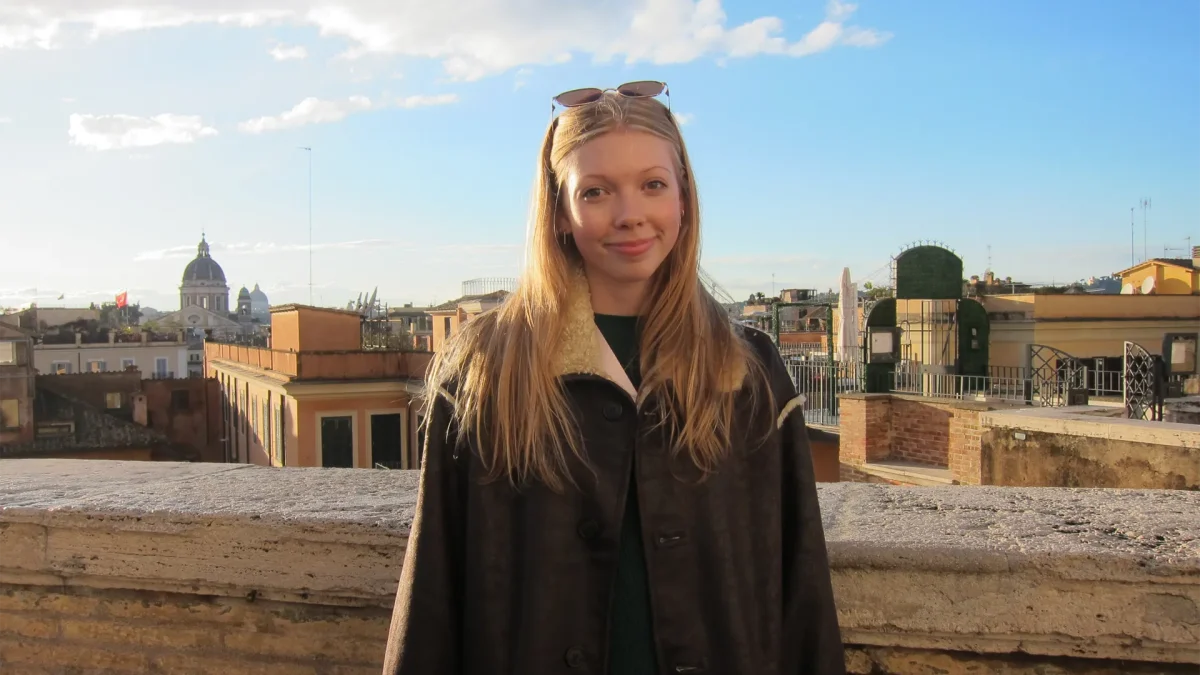
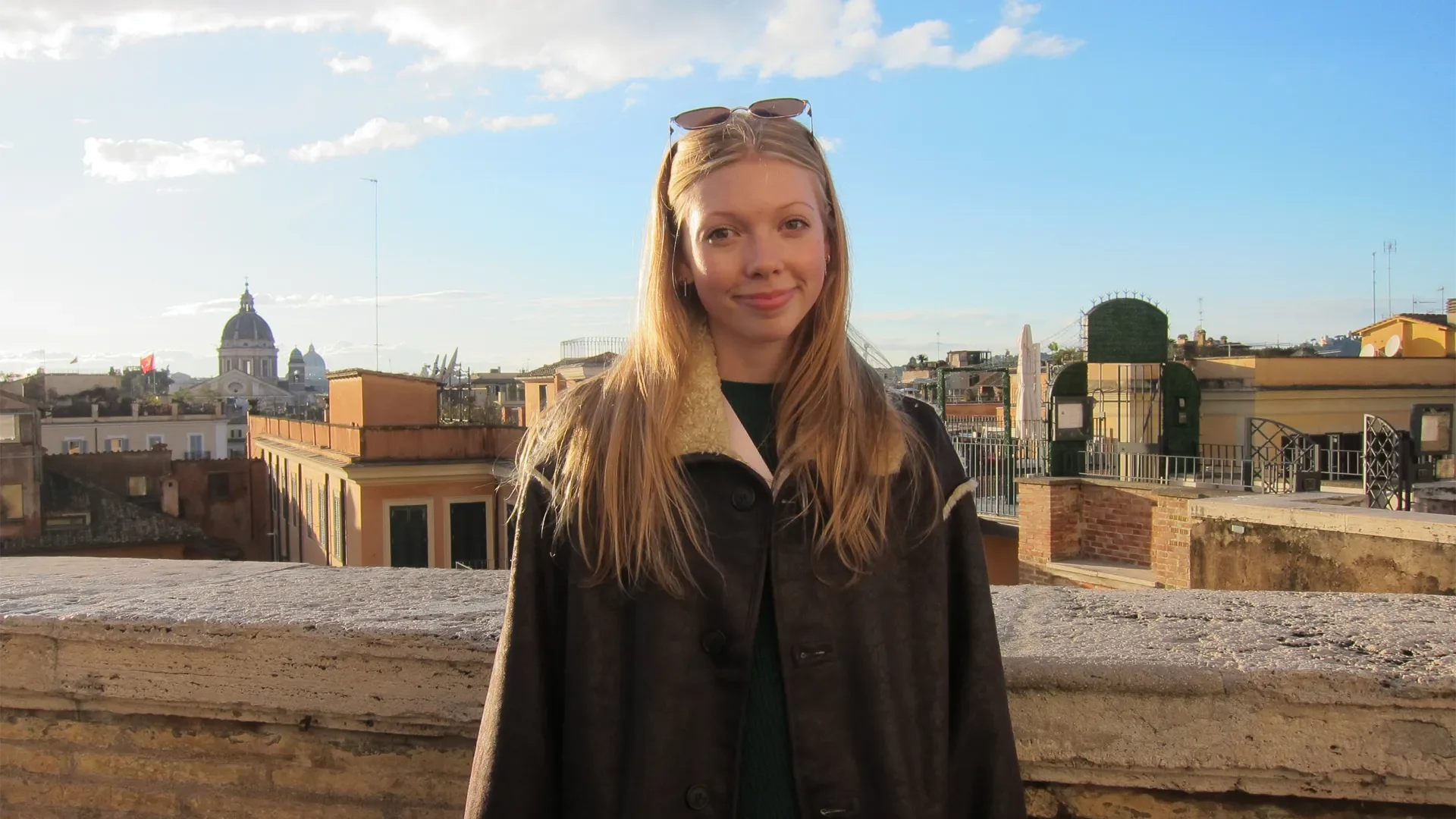
Elsa is from Sioux Falls, SD and is majoring in English with an emphasis on writing and is minoring in Journalism.