This piece was originally written as journal response to following prompt about “Were You There” arranged by Norman Luboff.
“The spiritual asks directly: ‘Were you there when they crucified my Lord?’ When you sing this question, how do you answer it personally? What does it mean to place yourself at the foot of the cross through music? Have there been moments when this piece has felt emotionally or spiritually heavy? Why?”
“Were You There” by Norman Luboff is one of the most convicting pieces I have ever sang in a choir. The spiritual asks directly: “Were you there when they crucified my Lord?”. Obviously, the time of Jesus’ crucifixion has come and gone, and this question was never meant to be answered literally. This question is one of hope, trust, and faith. I am someone who struggles abundantly with doubt, and lack of faith. I often ask the question myself: how can I believe something no one around me has seen?
So for me, I think this question is not one of extreme faith, but one of unsettled doubt. To ask the uncomfortable question, is to know that I have reflected on it myself. I was not there when Jesus was crucified. I know those around me believe dutifully, and I know that I have doubt. When I sing, I attempt to place myself at the foot of the cross, to imagine myself as if I was there, as if I can spread this message with not faith, but honest and true reaction. When I sing, I know that I am spreading a message larger than myself. If I were the only voice in the choir, our song would fall flat. But when I am one of many voices, I take on the story, the struggle, and the conviction of the song and of those around me. I know I am bringing to life something that is powerful and larger than myself. I feel a deep sense of responsibility to transform music into something that is reflective, accessible, and moving for all those who are willing to open their hearts and ears to our song. I am asked to reflect on the meaning of this song historically. Generations have suffered within the adherence to manifest destiny, people have been scrutinized for their beliefs, race, or nationality. These messages are larger than faith, they are songs of struggle, something that is not unique to any single person. When Luboff says, “Were you there when they crucified my Lord”, he is asking, have you seen this pain, have you felt this torture, do you know what Jesus endured? This pain, this suffering is not a lone battle, yet one that we’ve seen and can be reflected upon across generations
I have lost too many people in my life. I am young, but loss is not a unique experience. I need faith because it gives me hope for those that I have lost. I need faith because how can I stand that terrible things happen to those I love without a greater purpose? When I sing “Were You There” by Luboff, all of these questions, emotions, and doubts sit at the forefront of my mind. I sing for those I’ve lost, and for the struggles that people have prayed through. Luboff is begging us to see, that we all will tremble, and we all question faith just the same.
The sermon goes on, “sometimes, it causes me to tremble, tremble, tremble”, the refrain is asking for the audience to be uncomfortable with the heavy load of the music. For myself, this tremble is one of deep fear. I am fearful, what if my doubt is wrong? Will others see me differently if they know I do not have the same unwavering faith? I remember, when we first picked up the Luboff this year, the music came back to me in waves from the first time AC sang this piece a few years back. But, more than anything, the emotion flooded me. When we all sang the ending together, I was overwhelmed. In my life, it has been asked many times: What do you believe? And my answer hasn’t changed for years, but my answer is honest. I do not know. This isn’t me asking you to tell me what to believe: indecision itself is a belief. I think many people could answer the same, but are maybe scared to admit it. Maybe that’s where faith begins. So when I sing about conviction and the cross and it causes trembling, I beg of you think deeply, What is the source? Is it fear? Is it the Holy Spirit? Or is it something else, something more personal?
When I sing, I am not doing it only for myself. I am telling a story, something that goes beyond my doubts, something that is deeply meaningful to those who hear our song. When I sing, it could be the first or the last time someone ever feels convicted. Alone, we are incomplete. It is only together, in our sermon through song, that we are able to create something worthwhile.
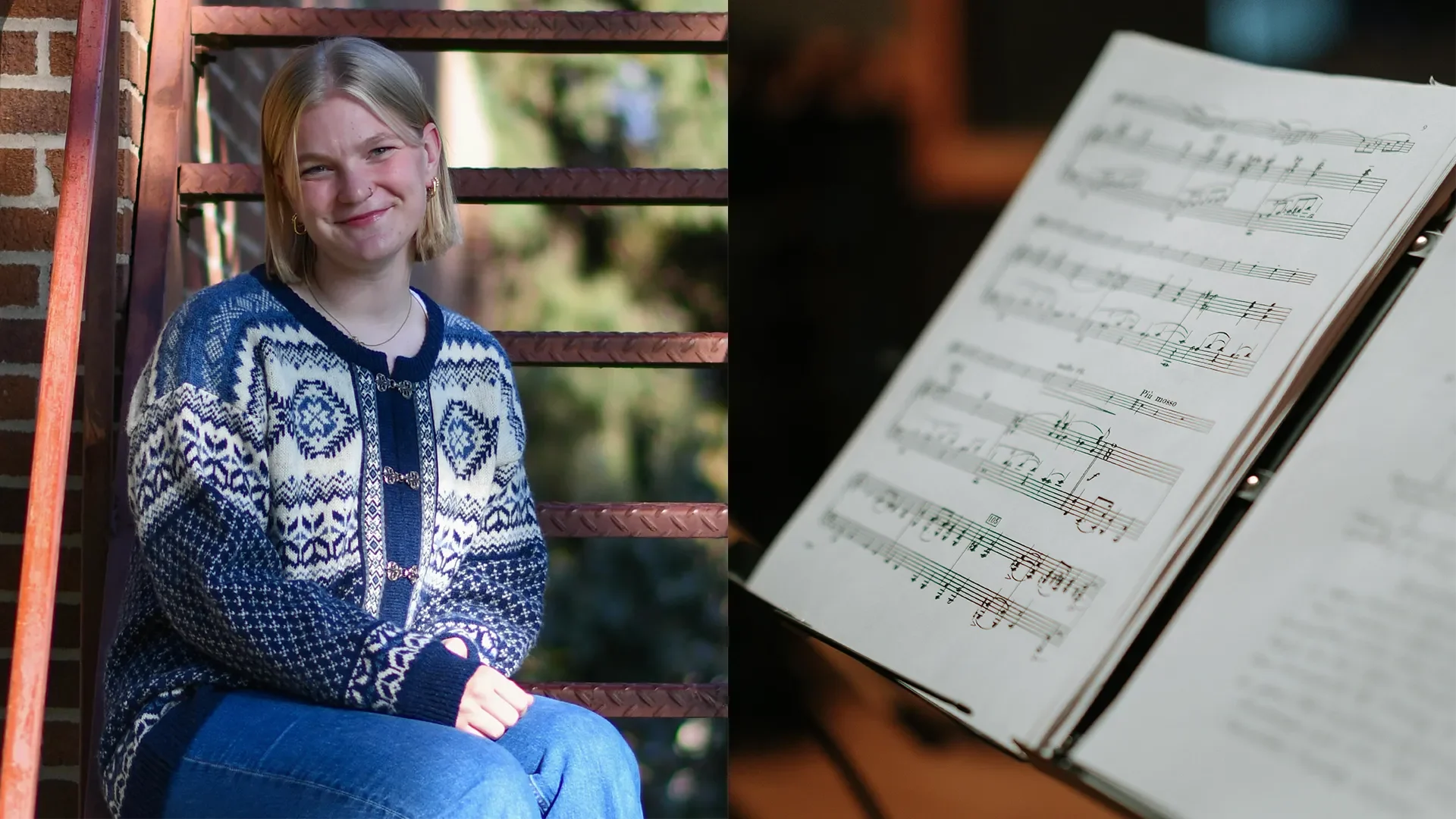
Sydney is majoring in secondary education and mathematics.